Sunday, 13 March 2016

Spencer's Snorkelling Safari Tours. They Kill Tourists, Don't They?

Hanauma Bay
For some reason, Hawaii is fast becoming a watery graveyard for snorkellers. Although snorkellers drown with all too depressing frequency in Belize, Florida and on Australia's Great Barrier Reef, more people drown whilst snorkelling in Hawaii than anywhere else in the world. And a lot of people have become very concerned. In fact, not so long ago, spurred on by the sheer number of people dying in the ocean, one Hawaiian politician even proposed making it illegal for snorkels to be sold or hired without safety valves. The reason for this proposed law was the fact that some snorkellers who had drowned on the paradise island had aspirated water through their snorkels. A safety valve, common on most snorkels, would therefore prevent this and by consequence the snorkeller wouldn't drown. 
 
Cobblers! You might think, and you'd be right. The addition of a safety valve would certainly do no harm, but the idea that so many people were drowning because they were aspirating water through their snorkel was fanciful at best.
In fact we pointed this out at the time in our post“Purging The Danger Out Of Snorkelling”.
What? You didn't read it! Shame on you.
Anyway, recriminations aside, the point we made in that post was that making it illegal to sell or hire a snorkel without a safety valve was missing the point by a very, very long way. 
 
In order to explain why we think this we first have to introduce you to a few characters who sadly infect the world of snorkelling and diving. The first is a type of diving instructor/divemaster that we call Brad. Now regular readers, and at the moment that clearly doesn't include you, will know that we have a particularly strong hatred for Brad.
Brad is a moron that equates being a sport diver with being a member of an elite special forces unit. Brad likes to wear lots of badges, works out at the gym every day, shouts abuse at newbies and harangues his students for regularly not making the grade and if you have the misfortune to go diving with him, he will get you killed. In the world of snorkelling however, there are no Brads. Instead there are what we call Spencers'.
Spencer doesn't wear badges or shout a lot, he can't be bothered with all that. He likes to wear bright surfer style t-shirts and shorts, never bothers to wash his hair and is so laid back it's often difficult to ascertain if he's conscious. Just like Brad though, Spencer will get you killed. He won't mean too, it's just that he's an idiot and unfortunately for tourists everywhere, he's an idiot that runs a snorkelling tour company. So let's go and meet him.

Tourist: “Hello, I'd like to book a snorkelling tour, but I'm a little bit worried as I am not a very good swimmer.”
Spencer: “No problem Mate, it's only snorkelling. Anyone can snorkel.'
Tourist: “Right. So being a poor swimmer is not a problem then.”
Spencer: “Of course not, In fact you don't even have to be able to swim. It's snorkelling. Anyone can snorkel.”
Tourist: “That's great, the kids will be pleased. They're quite young you see and still can't swim.”
Spencer: “Bring 'em along mate. The more the merrier. I think I've got some kiddies masks out the back somewhere.”
Tourist: “What about my wife? She's paralysed from the waist down and uses a wheelchair. Will she be able to snorkel?”
Spencer: “Absolutely. Anyone can snorkel. Will just stick her in a life jacket. We've got some special snorkelling jackets somewhere, they'll keep her face down in the water rather than head up. That'll stop her head bobbing up see. She'll get to see more then.”
Tourist: “Oh great. I've got my parents with me as well. They're quite old and my father has a heart condition. Would they be okay to snorkel?”
Spencer: “Of course they would. It's only snorkelling. Anyone can snorkel, I mean it's not like diving. Now that's dangerous – do you want to try diving by the way.”
Tourist: “Errr... Didn't you just say that was dangerous?”
Spencer: “Well it's more dangerous that snorkelling I suppose. But I got a mate over at Ocean Commando Diving Tours. His name's Brad and he reckons he can teach anyone to dive in ten minutes – you don't even have to know how to snorkel.”
Tourist: “Err.. Maybe another time. I think I'll just stick to the snorkelling for now.”
Spencer: “Well fair enough. Your loss. Right here's some fins, a few masks and a couple of snorkels. That'll be three hundred bucks – for an extra twenty I'll throw in a six pack of beer and for an extra fifty I'll even come with you.”

And there you have it, in a short imaginary conversation with Spencer, you can see the real reason why so many people drown while snorkelling. It's easy. Anyone can do it. You don't even need to be able to swim. Pre-existing medical conditions don't matter either, after all it's just snorkelling. All you have to do is float on the surface and look down – how hard can that be?
What? You don't believe that snorkelling tour operators would take non-swimmers snorkelling? I'm afraid you'd be wrong about that. In fact most of that imaginary conservation was not that imaginary at all! We just perused the web pages of snorkelling tour companies based in Hawaii, Belize and Australia, looked at there FAQ's page and cobbled together some of their answers to some very basic questions. Have a look at the Q&A's below. All are taken from genuine snorkelling tour operator's websites. Note most of the sites are based in countries that use American spelling; so snorkelling becomes snorkeling.

Do you have to be able to swim to snorkel?

Actually you DO NOT NEED TO KNOW HOW TO SWIM in order to snorkel with us. Seriously! We offer floatation devices like snorkel belts that will keep you afloat without you even having to do anything. No swimming skills required!

I am a weak swimmer and have never snorkeled before... Can I still do a snorkeling tour?

Yes you can do a snorkeling tour with us. We’ve had non-swimmers and non-snorkellers become happy first time swimmers and first time snorkellers. We have life vest that a weak swimmer/non snorkeller can put on, around them and that will give them sufficient buoyancy to stay afloat and have an awesome snorkel experience. Be sure to inform us of this so we can speak to you and keep an extra eye on you when you are in the water.. Don’t be afraid to ask for assistance… we are at your service.

I am not a strong swimmer and my wife doesn't swim at all. Is this something we can do?

Definitely! All you do to snorkel is float on the surface and look down at the beauty below. You might be surprised at how buoyant you are in salt water. It’s quite different than a lake or a pool. We also have plenty of flotation devices such as snorkel vests and foam pool noodles for extra floatation to put you at ease so that you can enjoy the view. Standing on the ladder is a great place to start. Once you feel comfortable, you can paddle off.


I have never snorkeled before. Can you teach me?

Our speciality! We are frequently recommended for beginners and non-swimmers as we specialize in small groups. Everyone on board gets lots of individual attention and help.

What if I can't swim?

Our tours are designed for non-swimmers up to experienced divers. For those who need a little extra help, no worries. Relax. We have taught thousands of people to snorkel including non swimmers, people who are afraid of the water, even paraplegics.

So there you have it. According to a lot of tour operators being a poor swimmer or not being able to swim at all are no barriers to snorkelling. Age, infirmity, heart problems? Yep they're no problem either. Anyone can snorkel. Surprisingly though, that advice flies in the face of the advice given by lifeguards, doctors and the emergency services. All of whom agree that being a strong swimmer and being comfortable in the water is a necessity if you are going to snorkel. Inexperience, an inability to swim, poor fitness or underlying medical conditions are common traits in drowning victims. Yet some snorkel tour operators still seem to ignore this. At the height of summer, with so many inexperienced snorkellers/non-swimmers in the water - fins thrashing, masks being knocked, selfie sticks prodding and poking everywhere – the risk of someone getting into difficulty and panicking are blatantly obvious. Is it any wonder then that so many people drown whilst snorkelling? 
 
Snorkelling is not as easy as you might think. It is a skill that needs to be learnt and practiced, you'll use muscles you've probably never used before, your breathing will be compromised by having to inhale and exhale via a tube. Waves and currents can drag you back and forth. Cold, fatigue and cardiac stress due to immersion in water can all have catastrophic effects. So if you are going to snorkel this summer do yourself and your family a favour, make sure you are fit enough, make sure you know how to clear your mask and can handle breathing through a snorkel and above everything else make sure you can swim. Oh and don't ever believe Spencer when he says anyone can snorkel because they can't but alas anyone can drown! 


Further reading
stand up or die Civil Beat / Hawaii's snorkelling deaths
How to not suck at snorkelling

A small selection of operators who offer snorkelling for non-swimmers, there are many more.


Sunday, 6 March 2016

Underwater Museums: Art Installation, Environmental Project, Indictment Of Diving Tourism Or Something More Taxing?


Jason deCaires Taylor, a former theatre set designer, paparazzi photographer and diving instructor, has been very busy in the last few years sinking statues in various oceans and writing a book about it. Jason's underwater installations can be seen in Grenada, Cancun in Mexico, Nassau in the Bahamas and now a new installation has opened in Playa Blanca, Lanzarote and a lot of people have become very excited about this. Blogs, the diving press and the mainstream media have all dedicated a great many column inches to Jason's work. Artistic types with slicked grey hair, thin glasses and effeminate mannerisms have waxed lyrical about how Jason's works express everything from slavery and the plight of refugees to mankind's apathy towards global warming. Ecology minded types, on the other hand, have upped the lyrical waxing by pointing out that Jason's installations use marine friendly concrete and promote coral growth – in short Jason is creating artificial coral reefs and increasing marine biomass. Others, those with a more financially tuned mind, have seen the opportunity to boost tourism to their part of the world with the unique selling point of an underwater art exhibition. The new installation in Lanzarote is being hailed as Europe's first underwater Museum, which is a bit odd because Turkey apparently opened up Europe's first underwater museum last year. 

Anyway that argument aside the whole idea of underwater museums sounds very laudable doesn't it? After all, what's there to dislike? Jason deCaires Taylor gets to show off his works and presumably gets some cash or at least increases his book sales. Environmentalists get to showcase both the plight of coral reefs and the possible solution, locals get to benefit from another tourist attraction and divers get to fin about in a new and interesting environment. Everyone is a winner then. Well, we're not sure on that. In fact we're a little worried about the whole thing. 
 
So let's drill down a bit. Firstly we're not interested in whether Jason's works have artistic merit. Art, like beauty is very much in the eye of the beholder, if you think it's art then it is. Nor are we remotely bothered about Jason using his works to highlight world issues. Although we would point out that Jason would have to have an ego the size of Mount Everest if he thought that sinking a concrete raft full of concrete statutes, in 12 metres of sea water, in the middle of the Atlantic ocean would bring the plight of refugees to the attention of the masses more than say; the entire worlds media that's been collectively filming it, writing about it and photographing it on a daily basis. Jason is British by the way, so he can't possibly have that big an ego could he? 


What we are a little unsure about is this: the original reason for the creation of these museums was not really to create a new coral reef. Sink a ship, a car or even a pile of concrete blocks and eventually they will be colonised by marine life. No the real reason for these creations is to distract divers away from the natural coral reefs that were being destroyed. 
 
Take Cancun for instance, the divers and snorkellers visiting the reef near Isla Mujere were having an unfortunate impact on the ecosystem. Coral was being damaged, leaching sunscreen was apparently poisoning the wildlife (and we'll be dealing with that in another post) and the sheer volume of bubble blowers visiting the reef was stressing the whole environment. Divers and snorkellers, often the most ecologically aware of tourists, were quite literally wrecking the place by their presence. Something had to be done to give the natural reefs some relief. So locals, conservationists and some arty folk got together and created an artificial site by dropping some concrete balls into the water in the hope that divers would want to see these rather than the natural reef. It didn't work. A concrete ball is after all a concrete ball until it is colonised and local dive operators and visiting divers were not impressed. As Robert Diaz, President of the Cancun Nautical Association put it: ““We have to bring tourists here. There was nothing to see. There were no fish. Just big balls that are empty—just horrible.”

The Director of the Isla Mujeres National Park in Cancun, Jaime Gonzalez became frustrated and considered closing the reef all together but this wasn't feasible. The answer came when Gonzalez discovered some art installations in Grenada. What if you could have something that wasn't an underwater eyesore before it became colonised by algae and coral – how about some statues. Enter Jason deCaires Taylor and the Cancun underwater museum was born. In fact so successful was the project that some dive operators complained that marine colonisation of the ghostly statues was ruining the show. This lead to Gonzalez cleaning the algae off half the statues by hand using steel wool and leaving the other half to continue being colonised. On Grenada, where Jason's statues were installed for the same reason as in Cancun, tourism has boomed with roughly half of all divers having been diverted away from the natural reef. Early indications seem to show that the same is happening in Cancun. Other artists are now getting involved and there are talks of having ten-thousand statues on the site in Cancun within the next ten years. 
 
Worrying don't you think? No? Okay let's explain. Firstly, let's ignore the fact that some environmental purists are appalled and argue that dumping statues, cars or concrete blocks into the sea is exactly that, dumping. With all the potential issues of changing the diversity of marine life and behaviour.
We'll also ignore the fact that some scientists dispute that divers and snorkellers are the reason the reefs are being damaged. Instead they cite pollution from the resorts and rising sea temperatures as the real culprits. The resorts are now booming so pollution levels are likely to get worse not better. 

But as we said, we'll ignore all that. The problem we have is that these underwater museums are not cheap. In Cancun, it cost $12000 to create and install each statue and that cost needs to be recouped. Which means you are going to be charged to visit them. And how long will it be before someone hits on the idea of charging for visiting the natural reefs? And we're not talking about the tour operator costs of taking a boat out to see them. We're talking about an extra charge. A tax. And how long will it be before someone gets the bright idea that viewing the underwater world as a whole, not just the reefs and sunken statues is a chargeable activity? In which case Snorkellers and divers entering the water from the beach, rather than taking an operators boat, are likely to be seen as tax dodgers and thus someone will want to bring in a charge for just going in the water! And don't think we are being absurd here. When environmentalism, economics and Art come to together, rationality goes out the window or the porthole for that matter. 

After all what diver would rather view a set of concrete statues rather than a natural reef? What snorkeller would rather look down on a series of fuzzy grey heads than on a vibrant natural landscape? And what kind of tourist is so oblivious to world crises that they can only get their consciences pricked by viewing a sunken depiction of refugees from a glass bottom boat? In fact when we think about it, underwater museums are not worrying, they are depressing. Have we really got to the stage when divers, snorkellers and freedivers would rather visit a man-made underwater structure in Cancun that looks exactly the same as the man-made installation in Grenada or the Bahamas or even Lanzarote than the amazingly diverse, stunningly beautiful and for the moment, absolutely free structures of the natural underwater world? Because if we have, that really would be absurd. 
 
By the way, according to Jason's own website, freediving on the Cancun installations is not allowed without a life jacket! Now we're not sure how you can freedive with a flotation device around your neck but we'll leave you, the reader, to work out the reason behind that little rule. We have already organised a trip to Lanzarote later this year, so we'll probably be re-visiting the idea of underwater museums then.

More reading
Jason deCaires Taylor's website
Scientific American website
BBC News website
New York Times website
Huffington Post website
Smithsonian Magazine
PBS website
Last Word On Nothing blog
 

Sunday, 28 February 2016

Full-Face Snorkelling Masks: The Easybreath Insanity Spreads

Back in 2015 we wrote a little post about the Tribord Easybreath full-face snorkel mask. The advertising for this science fiction style snorkel mask claimed that the Easybreath, with its revolutionary design, would open up the underwater world to all those people who didn’t like getting their faces wet or had difficulty breathing through their mouths. The mask's anti-fogging system would also end the niggling problem of having your vision obscured at inopportune moments and thus you'd never have to learn how to clear your mask. The Easybreath was, in essence, the answer to all those snorkelling problems that no one knew existed. Never again would you have to pack a separate snorkel and mask into your already overweight luggage, the Easybreath was an all in one. No more would you have to worry about your snorkel flooding as the Easybreath had a valve that stopped water entering. Never again would you have to worry about learning that most difficult of tasks - breathing through your mouth. And never again would that nasty, salty water have to touch your face. A great product all round then?

Err.... No! As we and a great many others pointed out at the time, the Easybreath is not revolutionary. In fact it is a step backward. Full-face snorkel masks have been around since the 1950's and all of them suffered from a shared flaw, they were rubbish. Let's explain.
Firstly, having your nose cocooned in a full-face design meant that you couldn’t pinch it and therefore couldn't equalise pressure. Diving down even a few metres meant your ears would explode. Then there's the fact that full-face masks have large air volumes by design, so if you did manage to survive your ears exploding two metres down, the air in the mask would compress your face to such a degree that when you surfaced you'd look like Quasimodo's uglier sibling. This means that all full-face masks limit the wearer to simply bobbing about on the surface like a piece of driftwood.
Secondly, all masks are prone to flooding. Whether it's from a seal failure or from being dislodged by wave action or even being bumped by another snorkeller's fin, the risk of water entering the mask is inherent. Snorkels can fail as well. Heavy waves can flood or dislodge them and valves can stick.

With a traditional mask and snorkel this isn't really a problem as your mouth and eyes are separated. But with the full-face design the problem is compounded. If water enters the mask in any real quantity, your breathing and vision are compromised simultaneously. Not a pretty prospect for those people who, as the advertising says, are uncomfortable with getting their face wet. Of course you could say that even this isn't a problem, if water gets in, just stand up and take the mask off. But, what if you can't stand up? What if you have happily drifted around and now find yourself a long way from the shore in deepish water with a mask filling up with water. The chances are that if that happens, the demographic that the manufacturers are aiming this product at will panic, and as all experienced water junkies know, panic kills. 
 
Finally there are a couple of other issues that even the manufacturer admits are a problem. You cannot exert yourself in a full-face mask and by exertion we mean swimming. Here's what the manufacturer of the Easybreath says on their own website:
 
Swimming requires a lot more effort than snorkelling, just as running requires a lot more effort than walking. Swimming training needs a significant amount of oxygen and your body will automatically switch to intensive mouth breathing. At this point, breathing with the Easybreath® would become very uncomfortable.

What the company is saying here is that you cannot use the mask to do swim training. What they are also saying is that they appear to know nothing about snorkelling or about the dangers of hyperventilating. Being able to swim well and at times, swim fast while breathing, is a very necessary ability if you are going to get yourself out of difficult situations in the sea. Any product that reduces that ability is potentially lethal. Equally, any manufacturer that doesn't believe that such an ability is needed is being rather stupid. Then there is the unique anti-fogging system that only works in water temperatures of 18 degrees. Anything below this optimum and the anti-fogging system doesn't work. Pretty useless then if you're snorkelling anywhere else than the tropics on a particularly hot day.
All in all then the Easybreath mask is a retro step in snorkelling design and we for one thought it would just be another gimmick that died out as quickly as it appeared. Boy were we wrong!

A quick look around the internet and you'll find that there are now a host of manufacturers expounding the benefits of their full-face masks.
There is of course the Easybreath made by Tribord but you can also buy the H20 Ninja mask made by a company in Hawaii, the Aria made by Ocean Reef, the Scubamax, the Neopines, and a great many more. Even Mares, a respected manufacturer of diving equipment for many years, has launched their own version called the Sea Vu Dry. We'd like to take a few seconds here to let out a deep despairing sigh..... Seriously Mares! What were you thinking?
Mares by the way are owned by the Head sports company, who now own the diving certification company Scuba Schools International (SSI). So if you are a diving school franchised to SSI we expect you'll be asked to sell this product to your students/customers – yes you will!


Now, you'd be hard pressed to find any difference between any of these products. They are essentially the same. Clearly, sometime, somewhere, a group of people in suits got together and held a focus group. The result of which (we imagine) was that a series of licences and co-operative programs were instigated to sell exactly the same product under different names to customers in various locations. Just as car manufacturers use the same chassis and engines but change the body shape and badge, the people behind the full-face mask concept have decided to do the same. Although they couldn't be bothered to change the actual body at all and decided that changing the name and colour was good enough. This has led to one of the funniest things we have ever seen. Watch the video below. It was made by the great guys at Deeper Blue and features three salesman from Ocean Reef, H20 Ninja and Mares (sigh) respectively, all demonstrating their full-face masks at the DEMA 2015 show in Florida. Now we don't know if the guys at Deeper Blue were deliberately poking fun but the sight of three salesman looking sheepish as they show off their wares is priceless. The sound is pretty poor in places so you cannot always hear what is being said but you can almost sense the cameraman thinking, “but it's exactly the same as that mask over there, and over there and... That one over there!”


Staying with the car manufacturer theme for a moment, imagine that you bought a car that had sealed windows and an engine that only worked on hot days. It could only reach speeds of thirty miles an hour, wouldn't go up the smallest of hills and the doors rusted away every time it rained . Now imagine you took it back to the salesmen and he said that it wasn't really meant to be used on the road, or at speed or off road or in temperatures below 18 degrees or in the rain. But then offered to replace it with exactly the same car but in a different colour and as a bonus, he'd throw in an action camera mount on the dashboard, would you take his offer?

Full-face masks are the snorkelling equivalent of that car. You can buy them in a variety of colours and with a variety of badges but they are all exactly the same with the same inherent problems. You can't dive with them, you can't swim with them. You can't use them in cold water or rough water. Yes you can mount a camera on the top which will film what you're looking at, but if the mask floods and it can, you will suddenly find you cannot see or breath and your film is going to be a bit jumpy. Still, at least it will provide the coroner with something to look at. Then again, as the manufacturers will no doubt say, these masks are not designed for traditional snorkellers, freedivers or bubble blowers. They are designed for people who are nervous of the sea, who don't like getting their face wet, who can't deal with traditional snorkels or masks and really just want to stay perfectly still and drift about on the surface. 

If this is the case and you are one of the people the manufacturers are aiming at we would like to offer a little piece of advice. Snorkelling is not as easy as some say. You need to be able to swim and swim well, which means you also need to be fit. You need to know how to deal with a mask that floods and a snorkel that fails. You need to understand the dangers of the ocean, its currents, waves, rocks and sea creatures that can sting and bite. If you can't cope with all of these things, then save yourself one hundred bucks or however much these things cost and stay out of the water - because snorkelling is not for you. There is also one other added benefit, you won't look like a twat on the beach.

Oh Mares,,, Why? Why?
Links
Our original post on the Easybreath

An endless stream of reviews of these masks can be found on Youtube, Just click here and enjoy

Sunday, 21 February 2016

Charter Boats, Diving Deaths And The Shaming Of The Diving Industry

In 1998 Tom and Eileen Lonergan went for a dive on Australia's Great Barrier Reef. They never returned. The crew of the dive boat they were on simply forgot about them, leaving them alone and lost in the vast ocean. It took two days before anyone even reported them missing and by the time the search was conducted nothing was found apart from a torn piece of Eileen's rash vest. It is believed they either drowned or were eaten by sharks. You may have read about the incident or if you didn't, you may have seen the film Open Water that was based on the whole tragic affair. Following this incident new rules were introduced to ensure that dive charters carried out accurate head counts, if 10 divers go in the water then 10 divers better come out of the water. Not exactly rocket science is it. Alas it seems, the art of counting is a skill that still evades Instructors and Dive Masters (and we use that term really loosely) around the world.

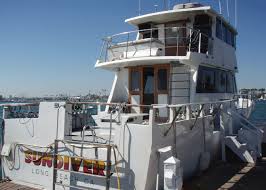
Sundiver Express
For instance in 2004, a year after the release of the film, the dive charter boat Sundiver Express left a diver behind following a dive off Newport Beach, California. The Sundiver was carrying a group of 20 divers and was staged near the oil rig Eureka. The diver in question Dan Carlock, experienced difficulty equalising, and was suffering from ear pain when he surfaced about 120 metres from the dive boat. Though he attempted to swim back to the boat, his legs cramped, so he waved a yellow safety buoy and blew his whistle. No one on the vessel noticed. A Dive Master working for Venice-based Ocean Adventures marked Dan Carlock present on the dive roster, even though he was absent when the remainder of the divers returned. As strong currents were picking up, the crew decided to move to a second dive site about seven miles away. When the divers left the boat for their second dive, Carlock was once again marked on the roster, even though he was on his own, several miles away from the boat. Three hours after leaving Carlock behind, the crew finally realised he was missing. The Sundiver’s Captain called the Coast Guard to the second dive site – miles from Carlock’s actual position.
 
The Coast Guard never found Daniel. Instead, he was spotted by a fifteen-year-old boy scout on board a tallship called the Argus. The ship was taking the scouts on an excursion and had veered off course to avoid a freighter. If not for the ship’s change in direction, it's possible that Carlock would never have been found alive. We suspect that Dan has been an ardent supporter of the boy scout movement ever since.
 
6 Years after the incident, Dan Carlock was awarded $1.68 Million in compensation for post traumatic stress and the fact that he developed skin cancer as a result of the sunburn he sustained while adrift. The court originally awarded $2 Million, but this was reduced as the judge considered that Carlock was partially to blame for surfacing so far from the ship. A decision that we and I suspect a great many will consider to be a harsh judgement at best and at worst, sheer bloody lunacy. Carlock was already in distress, and was surfacing due to that distress. It would be understandable then, that his orientation might have been affected. Somewhat different we might add, from failing to hear a whistle, failing to notice a diver waving a big yellow sausage around and marking a missing man as present, not once, but twice – some Judges eh!

Still you'd imagine that the Sundiver Express team would have learnt their lesson – never again would that happen! Err... Wrong. On 29th December 2015 the Charter left another diver behind. That morning, Laurel Silver-Valker, went diving for lobsters off the coast of Catalina Island with Sundiver Express. The boat left the dive site without realising Silver-Valker wasn’t on board. The boat returned to search for Silver-Valker, but was unable to find her and notified the Coast Guard. She has never been found. Press coverage of the incident has suggested that although a competent and experienced diver, Silver-Valker was not diving with a buddy at the time and that as she had previously worked dive-boats to fund her diving, it is unclear in what capacity she was aboard and may not have been on the diver roster. Whatever answers, to how and why Silver-Valker was left behind, might come to light during the investigation, the fact that this is not the first time that the Sundiver has been involved in such a tragedy means the whole experience is likely to be a very painful and costly one for all involved. Not least because Sundiver Express should not have been trading in the first place. According to the Orange County Register the tour company Sundiver International Inc. of Long Beach has unfiled tax returns and $3,991 in unpaid taxes, according to the Franchise Tax Board. Records show the tax board suspended Sundiver International on Feb. 1, 2012.

“When a company is suspended, they are not supposed to be engaged in any business,” Melissa Marsh, a Los Angeles attorney who helps revive suspended companies told the Orange County Register. “They are not allowed to collect any money. The banks have a right to close their accounts.” Sundiver International previously operated as Sundiver Inc., under owner Ray Arntz. Sundiver Inc. was also suspended by the Franchise Tax Board on May 1, 2008, for unfiled tax returns, state records show. So was Sundiver Charters LLC on March 3, 2014. Arntz, who’s still registered with the state as Sundiver’s president and CEO, did not respond to Orange County Register's requests for comment on the story.

There are of course some who will point out that these could be isolated incidents, exceptions that prove the rule that dive charters are very safe and that getting left behind, although a divers worst nightmare, is as likely as being struck by lightening. Well, as the Sundiver story shows lightening does strike twice, in fact it strikes an awful lot. Take a cursory glance through the diving press and online and you'll find that the diving world is surrounded by a smoky fog of lightening strikes.

In Antigua in 2007, that's nine years since the disappearance of Tom and Eileen Lonergan, two British divers were abandoned for five hours when the dive boat weighed anchor and left. The two Dive Masters and one Instructor aboard seem to have miscounted and were only made aware that 2 of the 13 divers who were supposed to be aboard were missing when the divers wives inquired about their husbands whereabouts when the boat returned to dock. Fortunately, both were rescued, although they did suffer sunburn, cuts and stings during their ordeal. The outcome however could have been very different with rescuers of the two men slamming the dive crew as “breathtakingly irresponsible”.

In 2008, and for the Dive Masters out there, that's ten years since the Lonergan incident, a British man and his American girlfriend were left stranded overnight off the Great Barrier Reef. The two divers surfaced some 200 yards from the charter boat and despite waving frantically the crew did not notice and sailed away – another apparent head count gone wrong. The pair, adrift in the darkness, clung to each other overnight. Hypothermia began to set in as did the thought of what lurked in the darkness beneath. They were rescued the following morning by helicopter, the pilot who winched them to safety commenting that “they were in surprisingly good humour”.
 
In 2011, and once again on the Great Barrier Reef an American Snorkeller was stranded 30 miles offshore when his charter boat also sailed away. Again the victim of a mistaken head count. Fortunately for Ian Cole, he managed to swim for 15 minutes to reach a another boat that was anchored nearby. 
 
Later in 2011, Paul Kline and Fernando Garcia Puerta had to cling to a buoy for two hours after surfacing from their late-afternoon dive in the Atlantic Ocean three miles from Miami and finding no trace of their boat.'We were in shock. We could easily have died,' Kline, 44, told the Miami Herald.'If night had fallen, the situation would have turned into panic.'He said they kept talking to each other throughout their ordeal 'to try to keep up our high spirits'. Mr Kline said that he initially thought there had been a medical emergency aboard the boat, which is why it was not there when he and Mr Garcia surfaced 55 minutes into the first dive after studying coral reef. He said he assumed another boat would be sent back for them. Instead, the other divers on the trip had already boarded and the boat was en route to the second dive site with the captain unaware he had left the two behind. The captain of the dive boat, Mike Beach, refused to discuss the incident with reporters, saying only: 'Everybody is OK, no one is hurt, everybody is happy.' In 2005, British divers Louise Woodger and Gordon Pratley were rescued in the same area after being missing for four hours. They were found suffering from exposure and hypothermia after currents forced them away from their boat.

Even the most vociferous defender of “diving charters” would have to admit that the examples above do not paint a very good picture but such defenders would also no doubt reiterate that these incidents, horrific and distressing as they are, are the exceptions. They would probably also say that using diving charters is perfectly safe and that more people die from road accidents, DIY accidents and falling down stairs than on diving charters. This is absolutely true, but as a defence it is pathetic. The examples above aren't a description of some unusual unforeseen accident, they were the result of staggering incompetence. In fact, and this is just our opinion, they are the result of criminal negligence. All of them have one thing in common. The people responsible, simply failed to count. They had no idea who was in the water and who wasn't. In the case of Dan Carlock, he was marked on the roster twice when he was clearly – unless you're a mathematically challenged dive leader – not on board. Then there is the fact that in 2015, when the Sundiver Express left yet another diver behind, the company shouldn't even have been trading. 
 
Time after time, incident after incident the failure to carry out an effective head count or roll call has left divers in danger or led directly to deaths. How in all that is holy, can such incidents still be happening? How are the so called Dive Masters, Dive Leaders and Instructors throughout the world not utterly embarrassed that such incidents have not only happened but continue to happen? And don't think the blame lies just with the Instructors, Masters, et al. There were a great many other divers aboard these ships, did they not notice their numbers were a little short? Did none of these divers think to themselves that it was odd that the blonde girl, the bald bloke or the nice looking couple had suddenly vanished? Did none of them have the wherewithal to speak up? What sort of training are these divers receiving if responsibility for the safety of their fellow divers can be abdicated so easily? The whole diving industry should be ashamed of itself, it should get its head out of the sand and start to accept that being left behind by your charter boat is a very real and very present danger. 
 
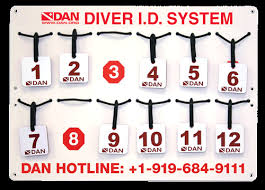
ID Tag System, simple and effective
So what can be done? Well, Dive Masters and Instructors the world over seem to have a very rudimentary grasp of maths, so making sure that they can count would be a start. But roll calls and head counts are clearly not enough and should be backed up by a diver identification system like the Divers Alert Network DIDs boards. Recreational divers are given a tag they attach to their equipment, a tag missing from the board means a diver is still in the water. The boat doesn't leave until a roll call is carried out and all tags are back on the board. It's not brain surgery is it? Still as we have said before, there are a great many Instructors, Leaders and Jedi Masters (well they think they are) out there with all the badges and all the certificates in the world but not a brain cell between them. So relying on them alone is not good enough. What is needed to back up the roll calls and DIDs is ruthless prosecutions of those whose incompetence or negligence leads to such events. People need to go to prison and business need to be sued to destruction. But we would go further, every diving association that issues the certificates that allows people to run diving businesses need to be held to account as well. If one of their members is found to be incompetent or negligent, then that association should face heavy fines. Only when PADI, SSI, BSAC and the plethora of other badge selling organisations out there are made to face the consequences of their members actions will the industry have a chance of getting rid of all the incompetents that quite clearly infest it. The Associations would of course fight tooth and nail to stop such a thing a happening, they're are in the business of selling badges and certificates not safety so we won't hold our breath (no pun intended).

So if you thinking about going on a dive charter in 2016, we wish you luck and hope that the boat is still there when you surface, because as the examples above demonstrate, there's absolutely no guarantee it will be. And that really is shaming. 

Links
The Sundiver Express 2004 Incident
The Sundiver Express 2015 Incident
2007 Incident
2008 Incident
2011 First Incident
2011 Second Incident

Think It couldn't happen to you! Think again...